The 6 Things Every Airbnb Welcome Book Actually Needs (And Nothing More)
Most Airbnb welcome books tend to become a bit too long over time.
And the truth is, guests usually don’t read them from start to finish.
Instead, they scan. They look for what they need in the moment, and if they can’t find it quickly, they’ll simply reach out and ask.
I learned this quite early on.
We were hosting remotely, living about 30–40 minutes away from our Airbnb, and every small missing detail could turn into a message — or sometimes just that quiet moment of wondering late in the evening:
“Did they find the key? Did they figure out the water heater? Are they okay?”
Over time, it became very clear that the goal wasn’t to provide more information, but to provide the right information in a way that feels easy to find and easy to follow.
If your goal is fewer questions and a smoother, more relaxed guest experience, your welcome book doesn’t need to be longer — it simply needs to be clearer.
These are the sections I would always include.
A Simple Welcome + Quick Orientation
This is your first impression, and it sets the tone for the entire stay.
A short, warm welcome message combined with a few key notes about the space is more than enough. You don’t need a long introduction — just a few thoughtful lines that help guests feel oriented and at ease from the moment they arrive.
Most guests are arriving after a journey, often tired, sometimes a bit overwhelmed. In that moment, clarity and a sense of calm matter much more than detailed explanations.

WiFi + Immediate Essentials
This is usually the very first thing guests look for, often within minutes of arriving.
It helps to make this information very easy to find and clearly visible:
- WiFi name and password
- A simple way to reach you if needed
- Any small but important practical details
If guests have to search for this, they usually won’t spend much time looking — they’ll just message you. Keeping it simple here saves both sides a lot of unnecessary back and forth.
How Things Work (Only What’s Not Obvious)
This is where most small issues tend to happen — not because guests aren’t paying attention, but because something isn’t immediately clear.
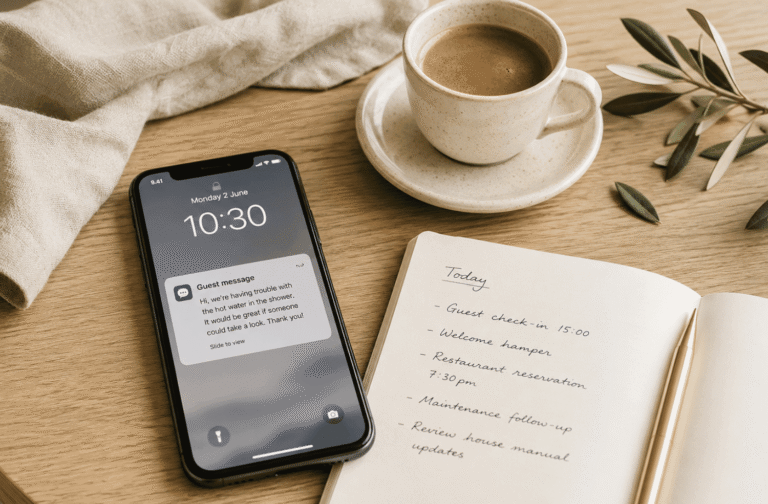
I remember we had a very simple water heater switch that needed to stay on. Even though we mentioned it, we still received a few quite dramatic “No hot water!” messages.
That was the moment it really clicked for me — if something needs explaining, it probably needs to be explained very clearly.
Focus only on the things that might not be intuitive:
- Air conditioning or heating
- Hot water
- Any appliance that works a bit differently
If something feels obvious, it’s perfectly fine to leave it out. Keeping this section focused makes it much more useful.
House Rules (Short and Clear)
House rules don’t need to feel strict or overwhelming to be effective.
A short, friendly list is usually more than enough:
- Quiet hours
- Smoking rules
- Caring for the space
Guests generally don’t ignore rules because they’re difficult — they overlook them when they’re hidden inside too much text. A clear and simple structure makes a big difference here.
Check-Out Instructions
It helps to keep this part as simple and easy to follow as possible.
Guests are often in a bit of a rush when leaving, so clarity matters much more than detail. A few short points are usually enough:
- What to do with the keys
- Basic information about trash
- Any final steps before leaving
When things feel straightforward, guests are naturally more likely to follow them.
And one small thing I noticed over time — it’s always good to gently remind guests about check-out.
Even something as simple as timing can slip their mind. I’ve seen this happen so many times in my work in tourism — that slightly panicked moment when guests suddenly realise they’re running late, not because they didn’t care, but because no one reminded them.
A short, friendly reminder can make that whole experience feel much calmer for everyone.
A Few Personal Local Recommendations (Not a Full Guidebook)
There’s one small exercise that can completely change how you set up your space.
This is the only extra section I would add, and it can make the stay feel much more personal.
That said, it’s best to keep it simple.
Guests don’t usually need a long list of options — they just appreciate a few thoughtful suggestions they can trust. You can group them in a very easy way:
- A few places to eat
- A couple of spots for a drink
- One or two places to explore
That’s more than enough to get them started.
I’ve noticed that when guests are given too many options, it can actually make things harder for them to decide. But when the list is short and curated, they’re much more likely to actually use it.
A Simpler Way to Share Guest Information
One thing I noticed over time is that guests rarely want long explanations — especially after a journey. They simply want quick answers that feel easy to access.
That’s exactly why I created this visual mobile self-check-in and stay guide template — designed to help hosts organize arrival instructions, house information, local recommendations and check-out details in a more guest-friendly way.
Experience the guide exactly like your guests would.
Try the demo directly on Etsy.

Lately, I’ve also started moving some of this information into a much simpler mobile-friendly format instead of relying only on traditional welcome books.
For example, I created a visual self check-in and stay guide designed to work almost like a small app experience — with linked pages for essentials, local recommendations, check-out information, and step-by-step arrival instructions.
It keeps everything minimal, clear, and much easier to use — especially after a long journey when guests are tired and just want quick answers.
Less Information, Better Experience
One of the biggest shifts for me happened when we realised we couldn’t rely on being there in person to explain things.
We had to make everything clearer in advance — and interestingly, it made us better hosts.
Instead of adding more and more information, we started focusing on what guests truly need in the moment.
A simple way to do this is to imagine arriving at your own place for the very first time, just like a guest would. Walk yourself through every small step: finding the entrance, getting inside, connecting to WiFi, turning on the air conditioning, making coffee, taking out the trash, or checking out in the morning.
When you look at your space this way, it becomes much easier to notice what might feel confusing, unclear, or missing.
And that’s usually what makes the biggest difference.
A shorter, clearer welcome book often leads to:
- fewer questions
- less confusion
- a smoother, more relaxed stay
For both you and your guests.
Want to Make This Even Easier?
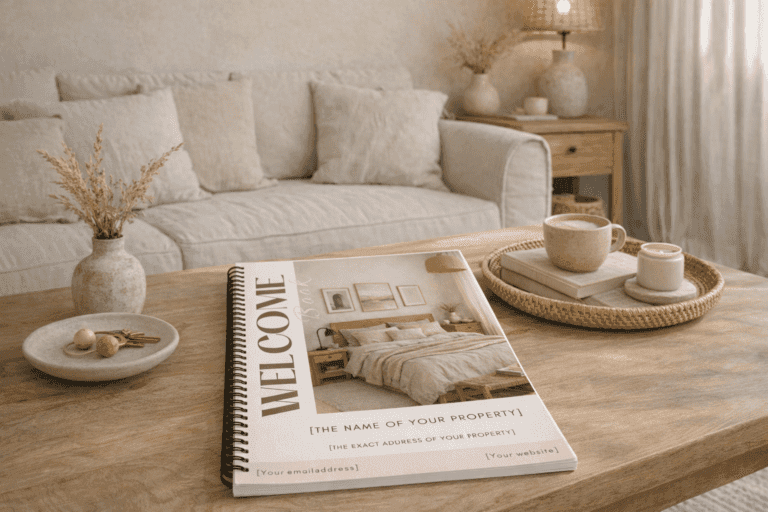
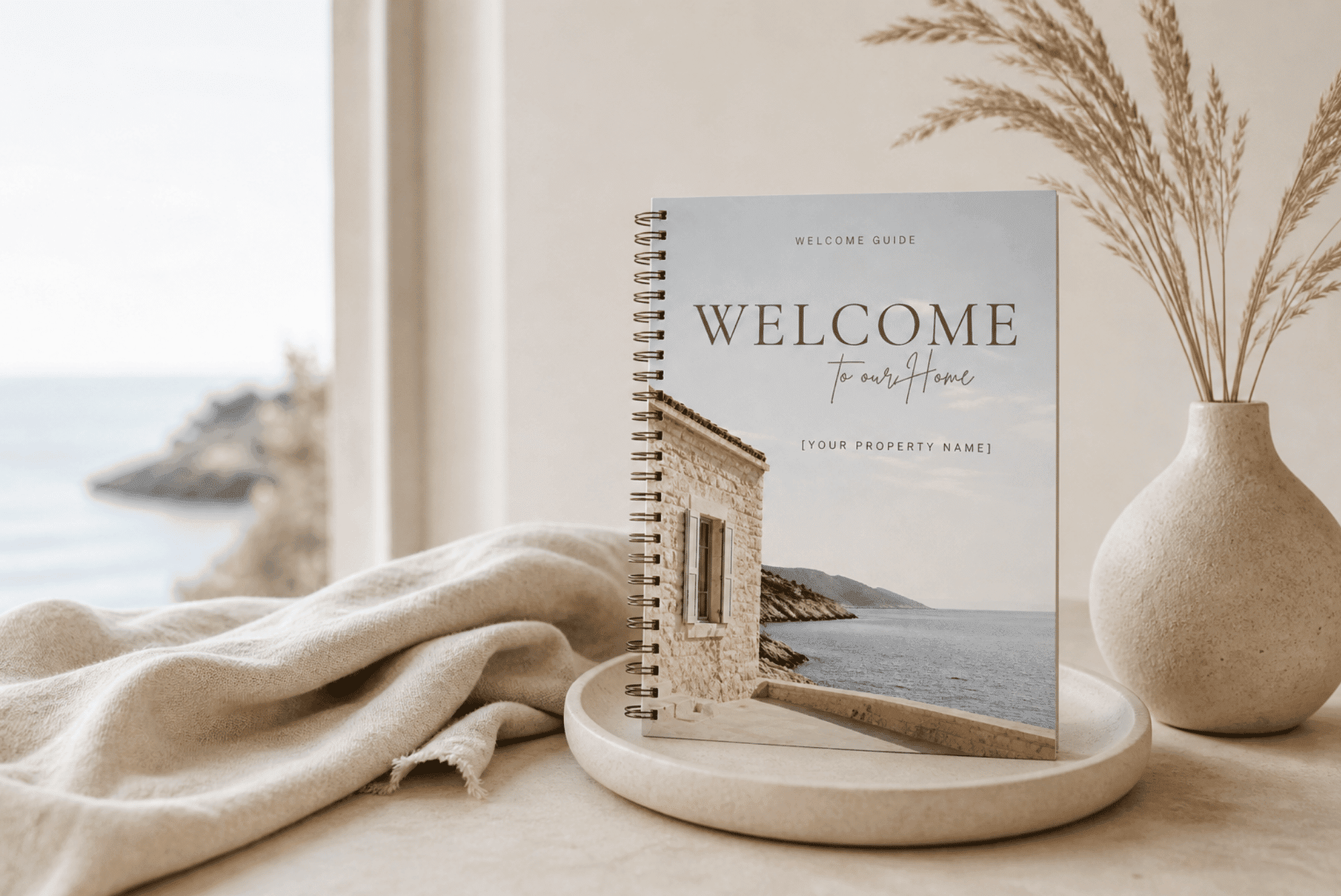
If you’d like a simple, clean welcome book that already includes these essential sections, I’ve created a minimal welcome book template that you can edit in Canva in just a few minutes.
It’s designed to include exactly what guests need, while still keeping everything calm, clear, and easy to use.

Tools I Created for Airbnb Hosts
Guests remember the feeling of a stay. How calm the arrival was. How organized the apartment felt. I share my full approach to guest experience, interiors and calm hosting systems inside the resources I created.
Visual Self Check-In Guide
A visual mobile guide designed to help guests arrive smoothly, settle in faster, and find important information without long messages.

Editable Welcome Book Templates
Beautifully designed welcome books that help guests feel informed, comfortable, and genuinely welcomed from the start.
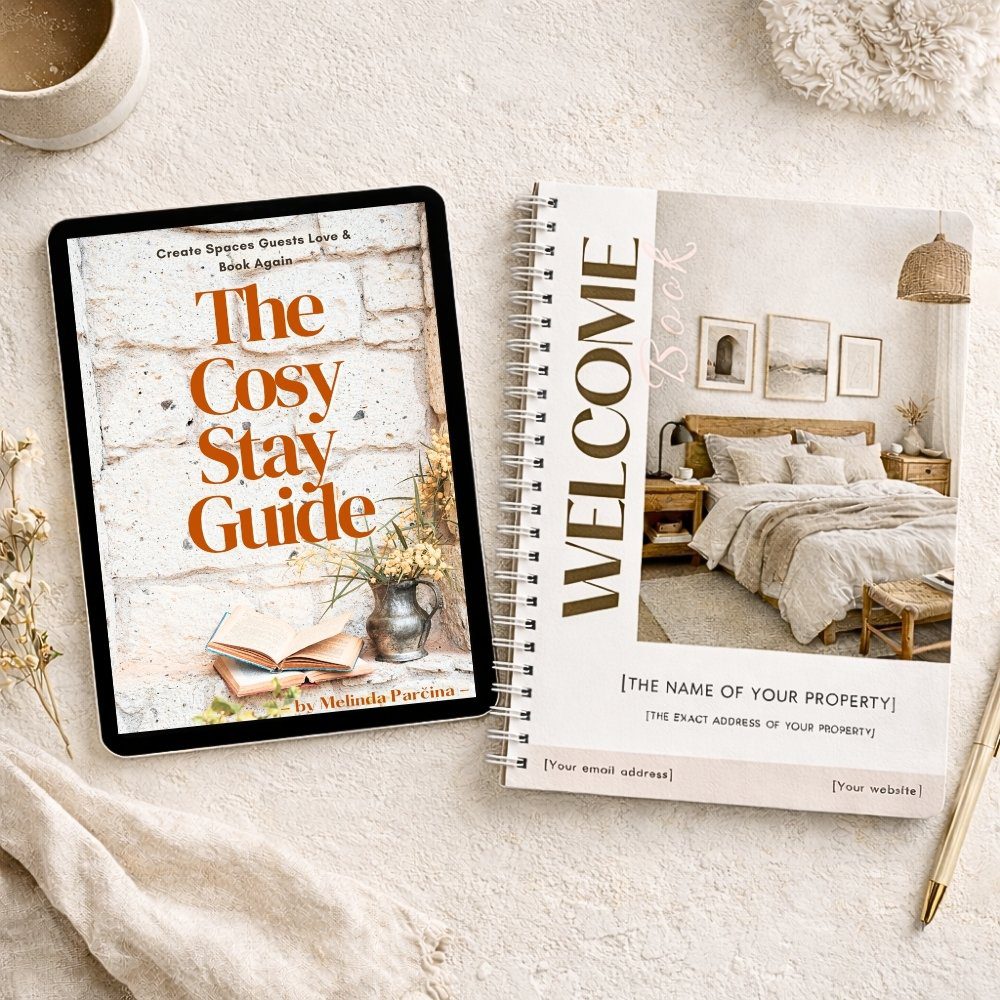
The Cosy Stay Guide
My complete approach to creating memorable guest experiences through thoughtful interiors and practical hosting systems.

Printable Airbnb Signs
Minimal, guest-friendly signs designed to reduce repetitive guest questions while keeping your rental space calm, clear, and cohesive.
Ready to Build Your Entire Guest Experience?
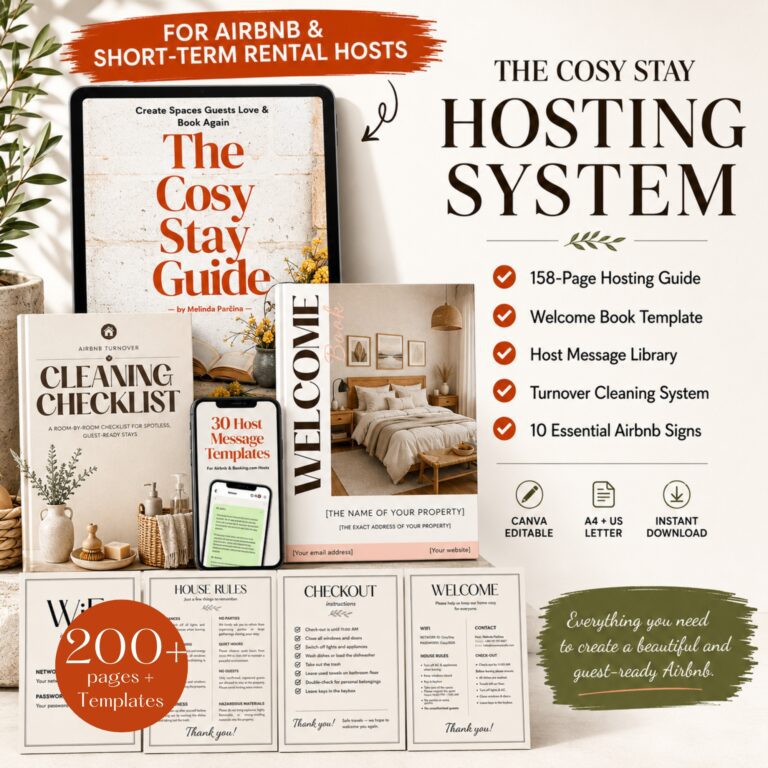
Your welcome book is just one piece of the puzzle. Get the complete collection of templates, guides, signs and systems designed to help you create a smoother guest experience from arrival to checkout.