How to Create an Airbnb Welcome Book Guests Actually Read
I spent hours designing a beautiful welcome book for our Trogir rental.
Thirty-two pages in Canva. Carefully chosen photos. Detailed explanations of every appliance. Restaurant recommendations organized by cuisine. A full guide to parking in the old town.
It looked perfect on my screen.
But here’s the thing: I never actually printed it.
We sold the house before I had the chance to use it with guests. And looking back? That might have been a blessing in disguise.
Because when I look at it now, I realize: it was way too much.
Too many pages. Too much information. Important details buried on page 18 when guests needed them on page 1.
I was so focused on being thorough that I forgot to think about what guests actually need — and when they need it.
A welcome book isn’t about how much information you provide. It’s about how easy you make it to find what matters.
Want a shortcut?
Instead of designing a long, overwhelming welcome book from scratch, you can start with a beautifully organized Canva template designed with only the most essential guest information across 12 structured pages:
✔ Clear, easy-to-scan layout guests actually use
✔ Dedicated sections for WiFi, house rules, recommendations, and check-out
✔ Minimal, curated design with no clutter or unnecessary pages
✔ Fully editable in Canva and easy to customize in minutes
A welcome book that feels elegant, organized, and genuinely helpful — not overwhelming.

The Problem Most Hosts Don’t See
Most of us create welcome books to be helpful.
We want guests to have everything they need. We want to anticipate their questions. We want them to feel prepared.
But in trying to be thorough, we accidentally create something overwhelming.
Long paragraphs. Too many pages. Important information buried in the middle.
Guests arrive tired. They want quick answers to immediate questions, not a novel to read.
A great welcome book doesn’t just inform. It reduces questions, prevents misunderstandings, and makes your space feel professionally managed — without making guests feel like they have homework.
Three Mistakes I Almost Made (That I See Hosts Making All the Time)
1. Too Much Information in One Place
My first version tried to cover everything.
How every appliance worked. Every restaurant I’d ever been to. Detailed walking routes to attractions.
Looking back, I realize this would have overwhelmed guests. They don’t want a novel. They want quick answers.
The fix: Focus on essentials first. Details can come later in the book for guests who want them.
2. No Visual Hierarchy
In my original design, everything looked equally important.
The WiFi details, appliance instructions, and emergency contacts all followed the same formatting, so nothing truly stood out.
The fix: Make critical information visually obvious. Use color, size, or placement to show what matters most.
3. Hiding Key Information
In my original version, I buried trash and recycling instructions inside longer paragraphs.
It seemed minor — until I realized guests often need that information quickly, not after reading half a page.
When practical details are hidden, small tasks become frustrating.
The fix: Separate functional information into clearly labeled sections. Guests should find what they need immediately — without searching.
What Actually Belongs in an Airbnb Welcome Book
An effective welcome book balances clarity with helpfulness.
Here’s what I learned works — organized by priority, not just category.

What a Well-Organized Welcome Book Looks Like
The most effective welcome books aren’t the longest.
They’re the easiest to navigate.
That’s why I organize each section separately:
• Welcome & WiFi
• House Rules
• Local Recommendations
• Check-Out Information
• Emergency Contacts
Everything has its own place, making information easy to find when guests need it.
Section 1: Welcome & Essential Information
Start with warmth, then practicality.
Include a brief welcome message that makes guests feel cared for. This isn’t the place for long paragraphs — just a genuine “we’re glad you’re here.”
Then introduce yourself. A photo and a few lines about who you are build trust immediately. Share why you love hosting, what you enjoy about your area, or what makes your space special.
Follow with quick property information — just enough context so guests understand where they are and what makes the space unique.
Contact & WiFi: Make It Obvious
This should be impossible to miss:
• Your contact information (phone and email)
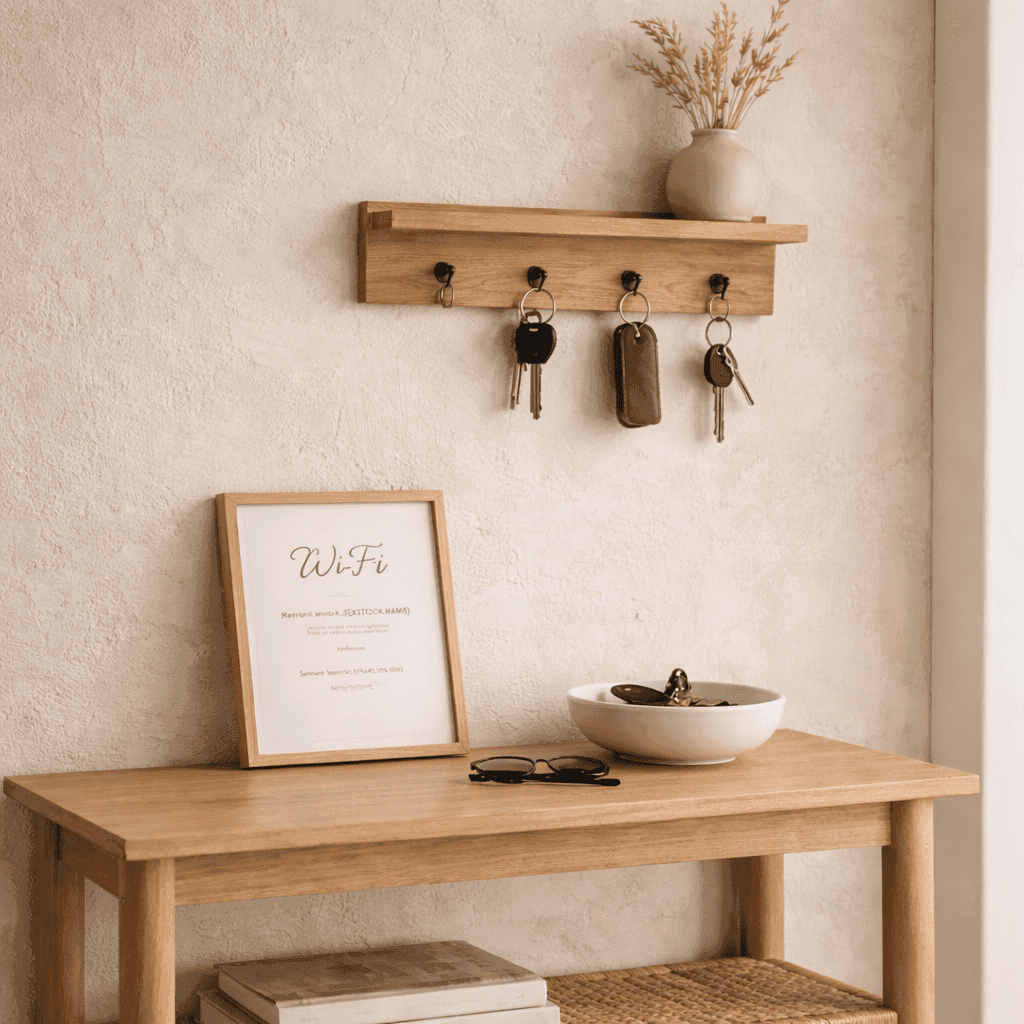
• WiFi network name and password (large, clear, easy to read)
• Emergency contacts (police, hospital)
Guests need this information immediately upon arrival. Don’t bury it halfway through the book.
Check-In & Check-Out Information
Set clear expectations upfront:
Check-in details: Explain your process, whether guests need ID, and what to expect
Check-out time: State it clearly (e.g., 11:00 AM) and mention your policy on late checkout
Check-out instructions: Where to leave keys and what to do before departing
This prevents confusion and last-minute stress for everyone.
Section 2: House Rules (Keep Them Simple)
House rules protect both you and your guests, but they shouldn’t feel like a legal document.
Keep them essential and straightforward:
• Smoking policy → Clearly state if smoking is allowed, and where
• Pet policy → If pets are welcome, mention any rules or fees
• Noise/quiet hours → Especially important in residential areas
• Party policy → If you don’t allow gatherings, say so directly
• Guest limit → Only registered guests permitted
• Security practices → Lock doors, close windows when leaving, AC only with closed windows
Frame these positively when possible. Instead of “Don’t leave windows open with AC running,” try:
“To keep the space comfortable, please close windows when using air conditioning.”
You may also want to include a dedicated section on trash and recycling — this is practical information guests genuinely need. Explain where bins are located, how to separate recyclables, and whether composting is available.
Section 3: How Things Work
Even common appliances can confuse guests in an unfamiliar space. This is where you prevent 90% of guest questions.
Provide simple, clear instructions for:
• WiFi (troubleshooting tips if connection drops)
• Heating/cooling systems
• Kitchen appliances (especially coffee machines — guests always ask about coffee)
• Washing machine and dryer (location, detergent provided, basic instructions)
• TV and streaming services (for example, letting guests know Netflix is available with their own login)
• Any smart home devices
Pro tip: For anything complicated (like our vintage Ariete espresso machine), I linked to a short YouTube tutorial. Guests loved this — much easier than reading written instructions.
Section 4: Getting Around and Transportation
Help guests navigate your area:
• Public transport information (bus/train schedules, ticketing)
• Taxi services you trust
• Ride-sharing options (Uber, Bolt, local apps)
• Car or bike rental recommendations
• Parking tips (this was crucial in Trogir!)
Suggest navigation apps they can download for real-time updates.

Section 5: Local Recommendations
This is where you can share your personality and local knowledge.
But again — don’t overwhelm. Organize clearly.
Places to Eat / Drink / Coffee Shops
Include variety. Casual spots and nicer restaurants. Different cuisines. Maybe mention places with gluten-free or vegan options — guests genuinely appreciate this thoughtfulness.
Things to Do
Highlight 5–8 favorites rather than listing every attraction. Think slow walks in nature, local spots worth discovering, and activities for different moods (active vs. relaxed). Add brief descriptions (1–2 sentences each). Share why you love them, not just what they are.
Encourage guests to reach out if they want personalized recommendations.
Essential Services
Nearest grocery store, bakery, pharmacy, self-service laundry (if you don’t have a washing machine).
Kid-Friendly Options (If Relevant)
Playgrounds, family activities, spots with high chairs and changing tables.
Pro tip: Encourage guests to check local tourism websites or Facebook groups for current events and seasonal happenings.
Section 6: Before You Go: Check-Out Checklist
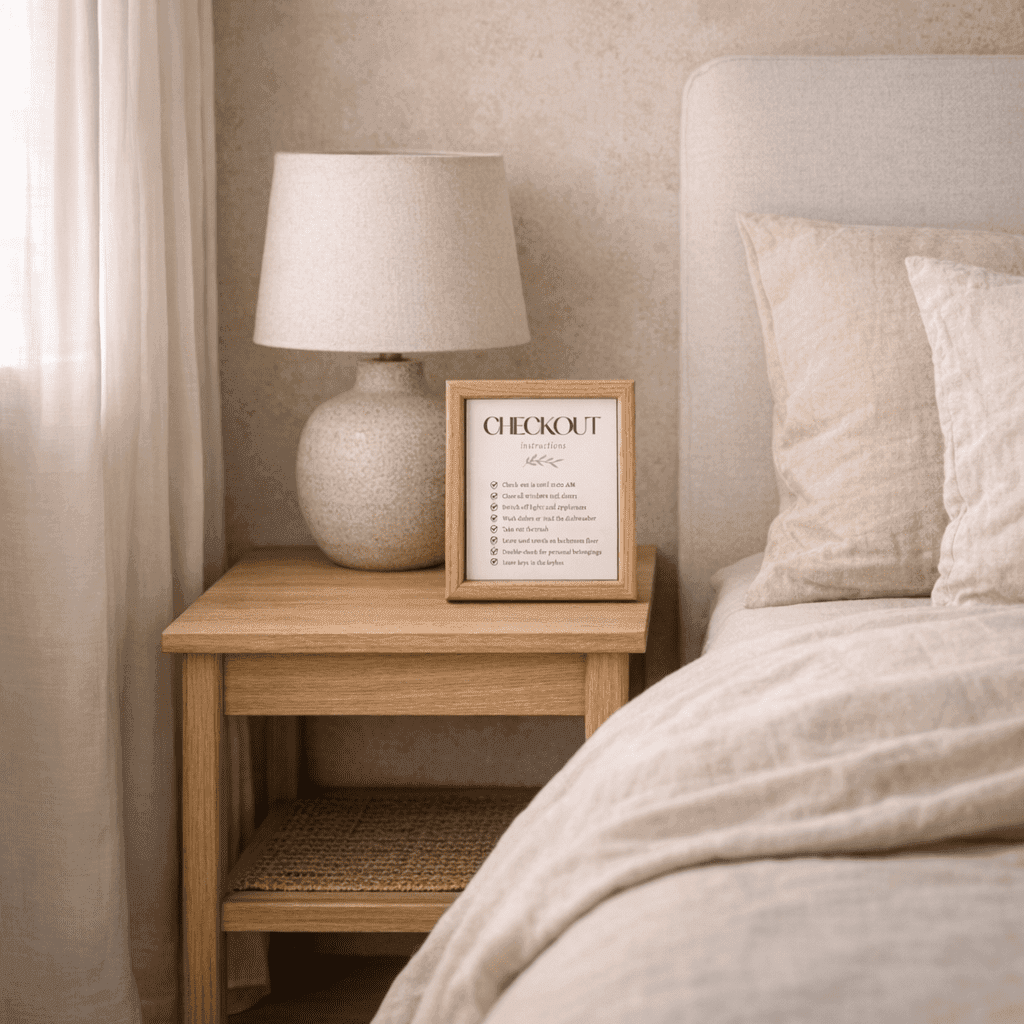
Make departure stress-free with a clear checklist, such as:
• Wash dishes (if possible)
• Remove personal food from fridge
• Take out trash and recycling
• Close and lock windows
• Turn off lights and devices
• Return keys to designated spot
• Check for personal belongings
This helps guests know exactly what you expect — and helps you prepare for the next arrival.
Section 7: Emergency Information
This should be easy to find but not alarmist.
Include:
• Location of fire extinguisher and first aid kit
• Emergency exit routes
• How to operate security alarm (if you have one)
• Nearest hospital and 24-hour pharmacy addresses
• Important local numbers (police, fire, medical)
Frame it gently:
“Your comfort and safety are important to us. We hope you won’t need this information, but please keep it handy just in case.”
Final Page: Thank You and Review Request
End with gratitude.
Thank guests for staying and caring for your space.
And yes — gently ask for a review:
“If you enjoyed your stay, we’d be grateful if you shared a few kind words in a review — it helps future guests find their way here and supports us more than you know.”
Keep it sincere, not demanding.
Include your contact information one more time so it’s easy to find.
Digital vs Printed — Which Is Better?
If you ask me, both have advantages.
Printed welcome books:
Visible and tangible
Aesthetic (fits your boutique vibe)
Guests naturally pick them up
No technology required
Digital welcome books:
Easy to update
Can include clickable links
Environmentally friendly
Guests can access on their phones
My recommendation: Start with printed, placed prominently (coffee table or kitchen counter). You can also send a digital version via message for guests who prefer it.
The best welcome book is the one guests actually use — format matters less than clarity.
A New Approach for Self-Check-in instructions
Instead of sending long arrival messages guests have to scroll through while standing outside with luggage, I created a visual mobile self-check-in and stay guide designed to work almost like a small app.
Guests can simply tap through the step-by-step arrival instructions and the essential information regarding their stay.
Want to see what guests actually receive?
Preview the interactive demo on Etsy.

What Makes a Welcome Book Actually Work
After years in tourism, working with guest feedback, and creating (then recreating) a welcome book template, here’s what I learned:
Clarity beats comprehensiveness.
Guests don’t want to know everything. They want to find what they need, when they need it, without searching.
Visual hierarchy matters more than content.
How you present information determines whether guests actually read it.
Structure and Spacing Matter More Than Page Count
If you look at the template I designed, you’ll notice something intentional
• Large, clear section titles
• One focus per page (WiFi, House Rules, Kitchen, etc.)
• Plenty of white space
• Short paragraphs instead of long blocks of text
Even though the full guide contains multiple pages, each page has one clear purpose.
That’s the difference.
A welcome book doesn’t feel “long” when it’s structured well.
It feels organized.
And organization creates calm.
When information is separated into clear sections, guests never feel like they’re searching. They simply turn a page and find what they need.
That feeling — of ease — is what makes a welcome book actually work.
Personality makes it memorable.
A welcome book that sounds like you creates connection. Guests remember hosts who feel human, not corporate.
It should evolve.
The first version won’t be perfect. Pay attention to what guests ask about despite having information available, and make those details more prominent.
This is exactly why I redesigned my original 32-page version into something clearer, more organized, and actually usable.
The Real Purpose
A welcome book isn’t just about reducing questions (though it definitely helps with that).
It’s about making guests feel:
Prepared.
Informed.
Cared for.
Confident in your space.
When guests feel this way from the moment they arrive, they relax faster. They enjoy their stay more. They leave better reviews.
And you? You spend less time answering the same questions repeatedly.
Everyone wins.

The Template Shortcut
Creating a welcome book from scratch takes time.
You need to organize information, design pages, maintain visual hierarchy, and ensure everything’s readable and attractive.
If you’d rather skip straight to having a professional, clear, easy-to-customize welcome book, I created a fully editable Canva template designed specifically for boutique-style Airbnb hosts.
It follows the structure I described above:
• A clean welcome and host introduction
• Essentials placed at the beginning (contact, WiFi, check-in/out)
• A dedicated, easy-to-scan House Rules page
• Separate pages for kitchen and house instructions
• Organized local recommendations
• A calm “Before You Go” checklist
• Clearly structured emergency information
• A warm thank-you page at the end
Each section has its own space.
Nothing feels crowded. Nothing feels hidden.
You can customize it in minutes and adapt it perfectly to your property.
Have you created a welcome book for your guests? What information do they ask about most? Share in the comments — I’d love to know what works for you!
Want more hosting systems that actually reduce stress? Check out my post on creating a stress-free check-in process that guests love.
A welcome book isn’t just about reducing questions.
It’s about creating a sense of ease from the moment guests arrive.
Everything You Need — And Nothing You Don’t
Create your welcome book in minutes, not days. Simple, beautiful, and easy to customize

Modern Minimal Welcome book
Only the most essential information your guests need, organized across 12 pages.

Coastal Welcome Book
Soft Mediterranean-inspired minimal design with the essential information.

Modern Welcome Book
Clean, elegant and easy to customize. Simple, timeless design that works anywhere.

Printable Airbnb Signs
A rustic and cozy welcome book template that makes guests feel at home.
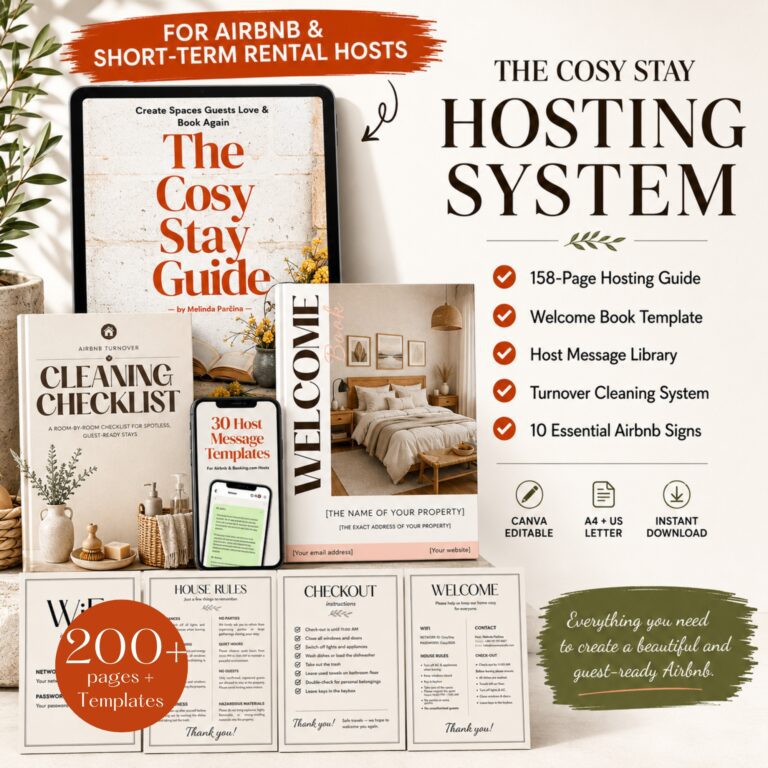
The Complete Airbnb Hosting System
Instead of buying templates one by one or creating everything from scratch, get the complete collection in one place and save yourself hours of work.