
How to Create a Stress-Free Self-Check-In for Your Airbnb (Without the 11 PM Panic)
The 11 PM Refresh
I’ll never forget standing in our kitchen in Split at 10:47 PM, refreshing my phone.
Our guests were supposed to arrive hours ago.
No message. No confirmation. Nothing.
Had they found the entrance?
Was the key box working?
Were they wandering around Trogir’s old stone streets trying to figure out which identical house was ours?
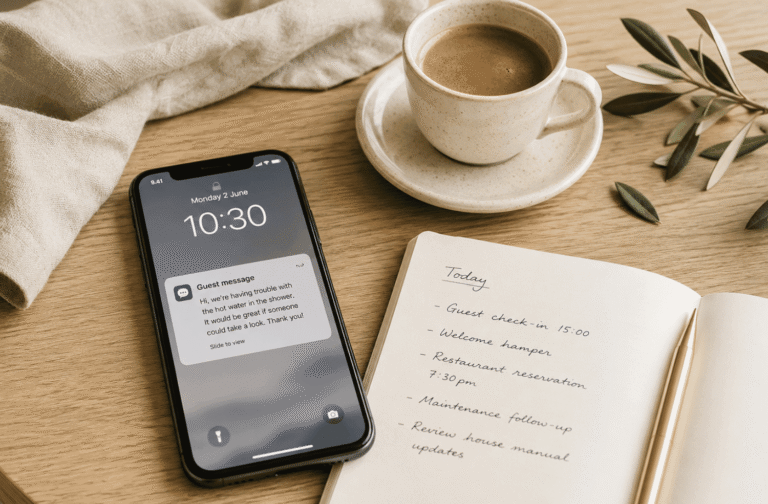
At 11:14 PM the message finally came:
“We’re in! Everything’s perfect. Sorry for the delay.”
I could breathe again.
But here’s what I eventually realized:
The stress wasn’t caused by my guests.
It was caused by the lack of a system.
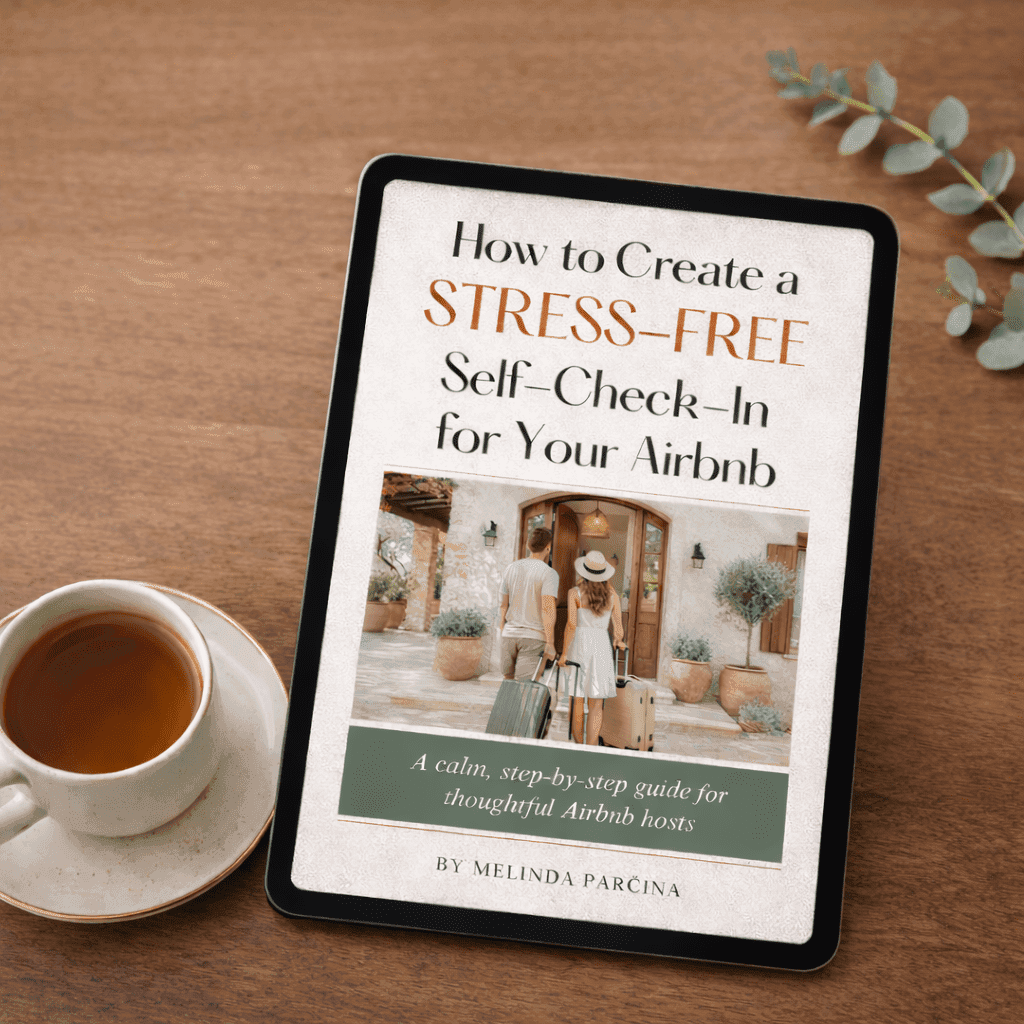
If you’d like a simple way to set this up without second-guessing every step, I’ve put together a free Stress-Free Self Check-In Toolkit with the exact structure I used.
You can download the free Stress-Free Self Check-In Toolkit here

The Real Reason Self Check-In Feels Stressful
Most hosts think self check-in is about:
- The key box
- The code
- The instructions
But that’s not where things go wrong.
The real problem?
Uncertainty.
Guests don’t want perfect instructions.
They want confidence.
And hosts don’t want detailed processes.
They want peace of mind.
A smooth check-in is not about logistics.
It’s about removing doubt.
Where Self Check-Ins Usually Break Down
After two seasons of hosting (and way too many anxious evenings), I started noticing patterns.
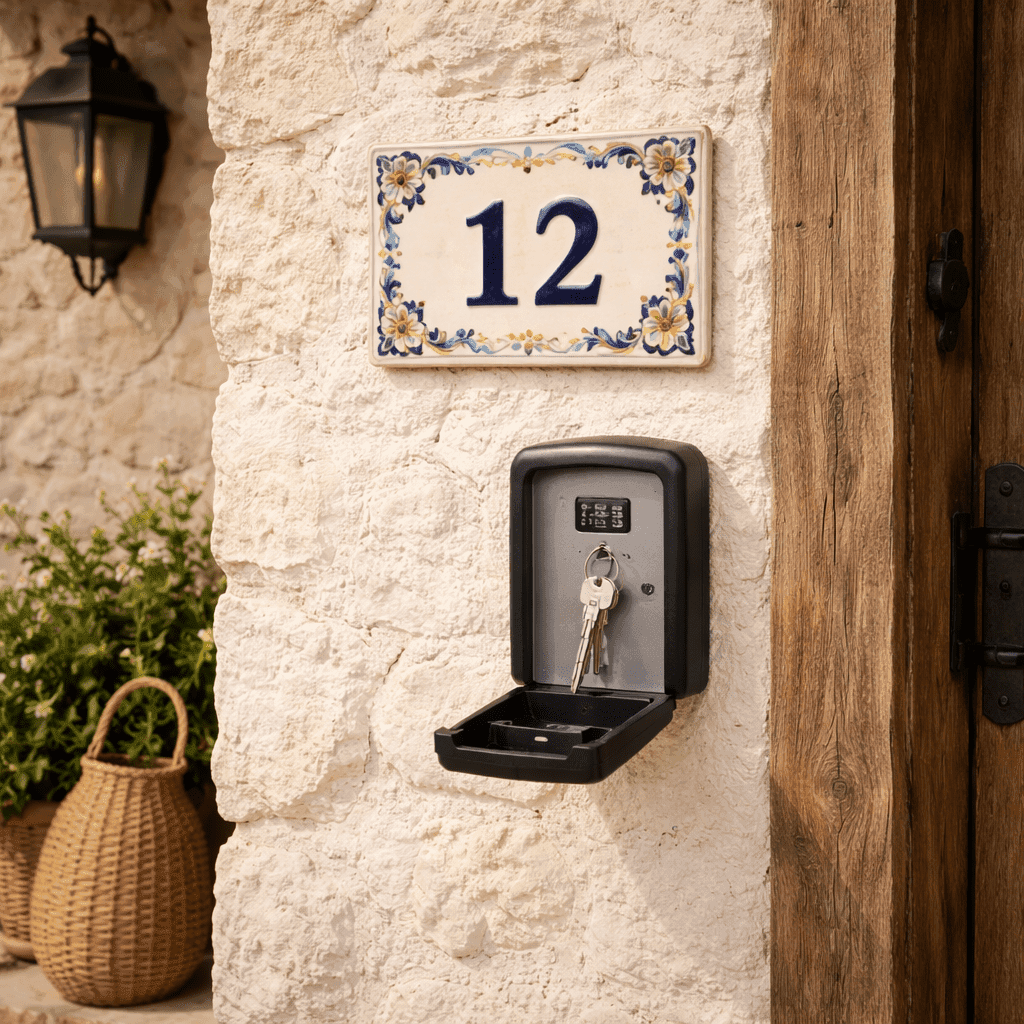
1. The “Obvious” Entrance That Isn’t Obvious
In Trogir’s old town, there were four nearly identical stone houses on our street.
To me, it was obvious which one was ours.
To a tired guest dragging luggage at night?
Not obvious at all.
The fix wasn’t more text.
It was one clear photo.
That single image prevented dozens of confused messages.
2. Sending Instructions Too Early
In the beginning, I sent check-in details right after booking.
Big mistake.
Guests booking months in advance are dreaming about beaches — not memorizing key codes.
By the time they arrived, they couldn’t find the message.
When I started sending full check-in instructions 24–48 hours before arrival, everything changed.
Timing matters more than length.
3. Assuming Guests “Will Figure It Out”
I assumed guests would:
- Know how to open the key box
- Understand the mysterious water heater switch (Dalmatian phenomenon 😅)
- Instinctively operate the coffee machine
Every assumption created friction.
And friction creates stress — for them and for you.

What Actually Makes Self Check-In Feel Effortless
After plenty of trial and error, I realized something simple:
A stress-free check-in has three invisible layers. (If you’d like this structured step-by-step, I’ve included the full checklist and message templates in the free toolkit.)
Layer 1: Physical Clarity
- Visible entrance
- Good lighting
- Easy-to-use access
- Tested lock
- Backup plan
If technology fails at 10 PM, you don’t want to invent solutions on the spot.
Layer 2: Psychological Safety
Guests need to feel:
- I’m at the right place.
- I’m doing this correctly.
- Someone is available if something goes wrong.
One small sentence changed everything for me:
“Once you’re inside, please send me a quick message so I know everything went smoothly.”
That message gave me peace — and gave them permission to speak up.
Layer 3: Emotional Arrival
Self check-in doesn’t mean cold check-in.
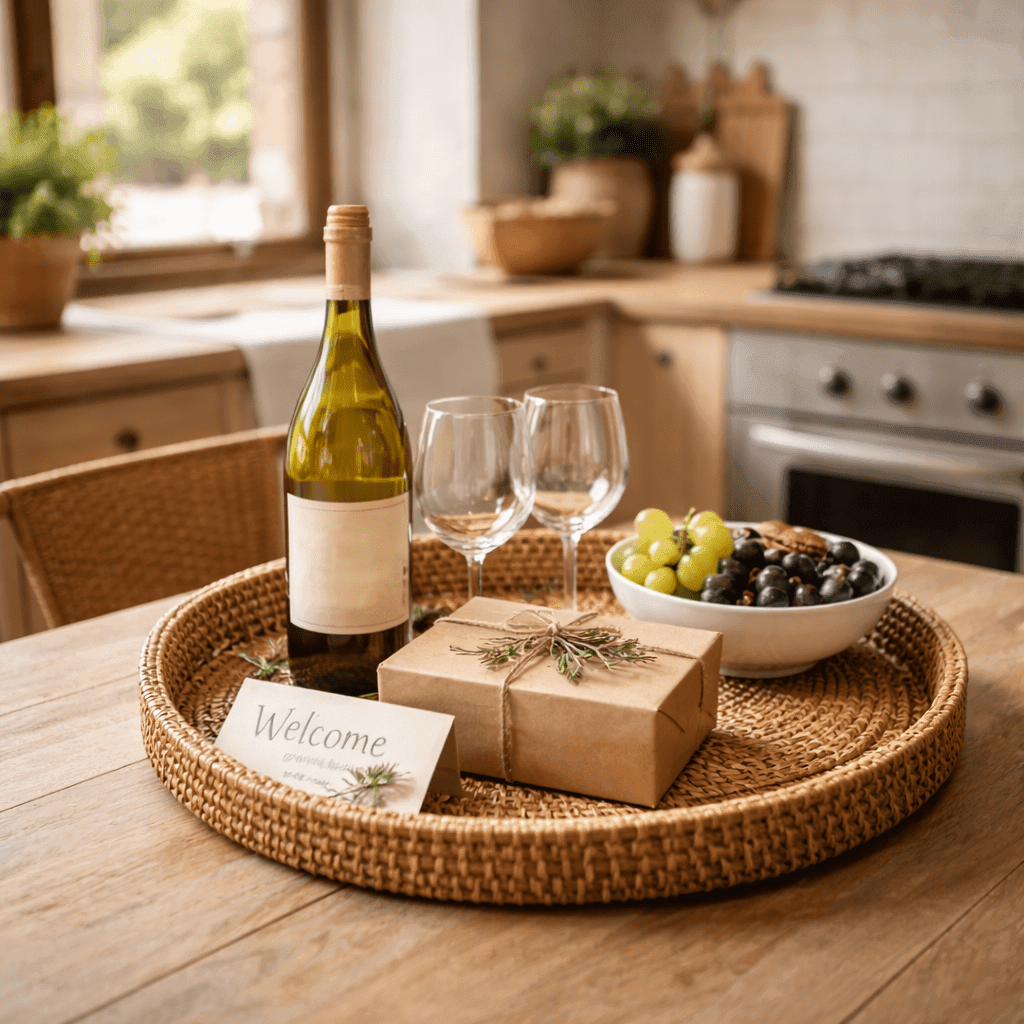
When guests opened the freezer and found ice cream in summer…
When the heating was already on in winter…
When soft lighting greeted them at night…
They felt welcomed — even without me there.
That first emotional moment shapes the entire stay.
The Easter Monday Lesson
One Easter Monday in Croatia, everything was closed.
A family was arriving that day.
No grocery stores. No restaurants. Nothing.
I messaged them:
“Would it help if we picked up some breakfast basics so you don’t arrive to an empty fridge?”
We spent maybe €20 and one hour.
They mentioned it in their review.
They asked to book again the following year.
That moment taught me:
Great check-in isn’t about keys.
It’s about anticipation.
Self Check-In Is Really About Confidence
When guests arrive confidently:
- They relax faster
- They enjoy the space more
- They message less
- They leave better reviews
And you?
You stop refreshing your phone at 11 PM.

The Difference Between “Hope It Works” and “I Have a System”
For a long time, I was hoping everything would go smoothly.
Eventually, I created a clear, repeatable structure:
- When to message
- What to include
- What to test
- What to double-check
- What to do if something fails
Once I had that system, hosting felt lighter.
And calm hosting creates better hospitality.
Recently, I also started simplifying some of these systems into a much more visual, mobile-friendly format.
Because after a long journey, most guests don’t want to read long PDFs or scroll through detailed messages.
They want clarity.
They want reassurance.
They want to know they’re doing everything correctly.
So I created a visual self check-in and stay guide designed to work almost like a small app experience.
Guests can simply tap through arrival steps, essentials, local recommendations, and check-out information — all in one place.
The goal was simple:
Less confusion.
Fewer questions.
A calmer arrival experience for everyone.
Curious how the interactive guide works?
Preview the live demo directly on Etsy HERE.

Want to Create Your Own Stress-Free Check-In System?
If you’re still:
- Answering the same questions every stay
- Feeling nervous on arrival nights
- Unsure whether your instructions are clear enough
- Hoping technology behaves
You probably don’t need to work harder.
You just need a clearer structure.
I put together the exact framework I used — including:
✔ A step-by-step check-in flow
✔ A day-of-arrival peace-of-mind checklist
✔ Backup planning prompts
✔ Ready-to-use message templates
✔ A complete communication timeline
Download the free Stress-Free Self Check-In Toolkit here
Because hosting should feel calm.
Not like waiting for a crisis.
Want to create a stay guests truly remember?
If you’d like to go even deeper into guest experience and calm hosting systems, I share more inside The Cosy Stay Guide.
Tell Me…
I’m curious — what’s your biggest self check-in challenge right now?
Feel free to leave a comment below, I’d love to hear.
Late arrivals?
Confused guests?
Technology stress?
I’d love to hear.
For more inspiration and ideas, follow me on Pinterest too!





This helps a lot. Thank you
I’m so glad to hear that — thank you so much for reading 🤍