How We Turned an Abandoned Stone House into Boutique Airbnb (Renovation Journey)
A real renovation story from Croatia— how we transformed a mold-covered stone house into a boutique-style Airbnb guests loved.
For as long as I can remember, I’ve been fascinated by before-and-after stories.
Those moments when something forgotten — something covered in dust and years of neglect — is transformed into something beautiful again.
When I moved to Dalmatia fifteen years ago, I fell completely in love with the region’s stone houses. The thick walls, the traditional architecture, the quiet sense of history in every corner.
For years, my husband and I dreamed of finding one of these abandoned beauties and bringing it back to life — not just for ourselves, but as a place travelers could experience too.
Three years ago, we finally found it.
The House That Had Been Waiting
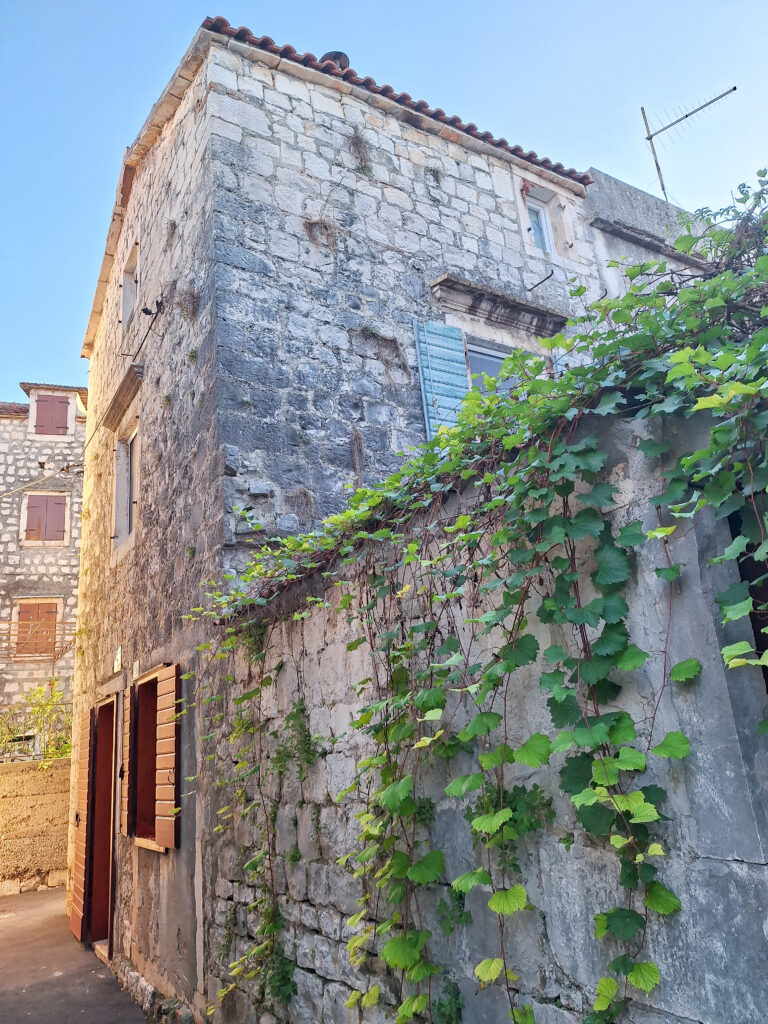
We discovered an old stone house in the heart of Trogir’s old town.
Abandoned. Forgotten. Covered in vines and years of silence.
But somehow — even in that state — we could see what it could become.
The location was perfect.
The structure was solid.
And the price was reasonable.
We didn’t hesitate.
By spring, renovations had begun.
Walking Into a Time Capsule
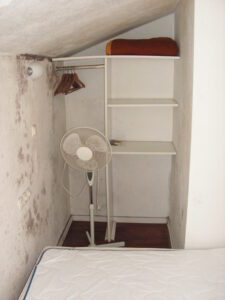
The first time we stepped inside, the smell hit us immediately.
Musty. Damp. Heavy with years of trapped air.
The previous owner had sealed the house with plastic windows and left it closed for seven or eight years. No airflow, no ventilation — just moisture slowly damaging everything inside.
Mold covered the walls.
Furniture had rotted from dampness.
The laminate flooring was ruined.
At one point we even found food in the kitchen cupboards with expiration dates from 2017.
It felt like stepping into a place that had simply… stopped.
But beneath the damage, the house itself was beautiful. The stone walls were solid. The structure was strong.
The potential was enormous.
So we got to work.
The Vision: Rustic Charm Meets Modern Comfort
From the beginning, I knew exactly what I wanted.
A space that honored the house’s history while feeling light, airy, and welcoming.
Rustic character — but not dark or heavy.
Natural materials — wood, rattan, cotton.
Minimal furniture — every piece intentional.
The house itself was small: just 58 square meters spread across three floors.
Ground floor — kitchen, dining room, bathroom
First floor — living room
Second floor — bedroom
We had one tourist season to prepare it.
Four months.
My husband handled most of the physical renovation work — removing damaged floors, cleaning mold, painting, and installing everything.
Meanwhile, I spent every evening after my full-time job planning layouts, selecting furniture, sourcing materials, and designing each room.
It was exhausting.
It was exhilarating.
And it was exactly what we had dreamed of.
The Bedroom: Creating Space From Chaos
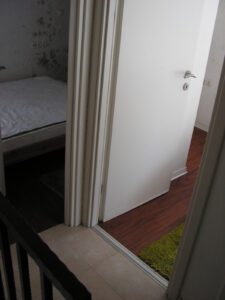
The attic floor originally contained two tiny rooms, a narrow hallway, and a small toilet.
Cramped. Dark. Impractical.
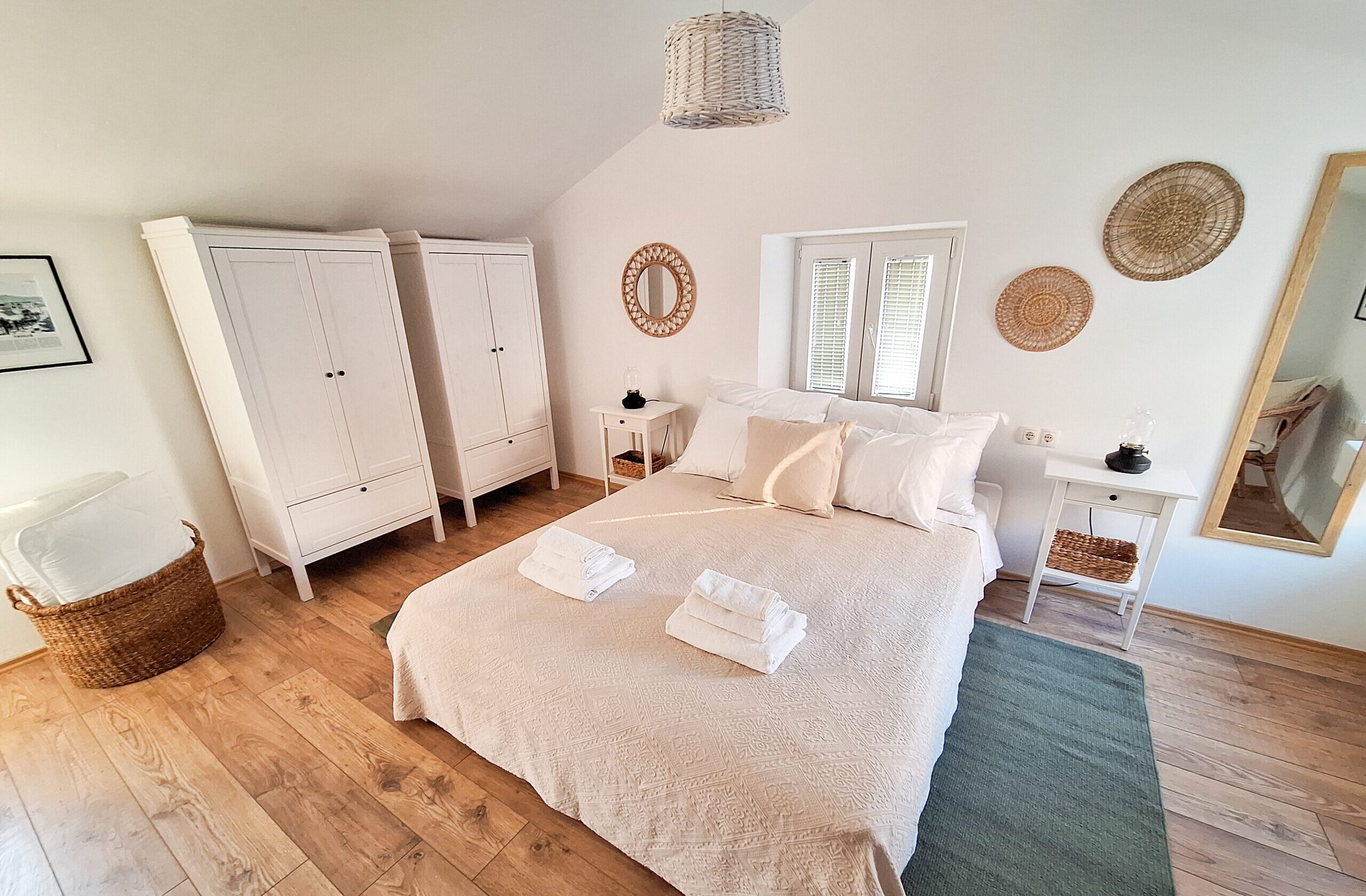
Instead of keeping the layout, we knocked down the dividing wall and created one open bedroom.
Yes, it reduced our rental capacity. Technically we could have hosted more guests by keeping two rooms.
But we chose comfort over maximum occupancy.
We wanted guests to feel like they could breathe
The Design
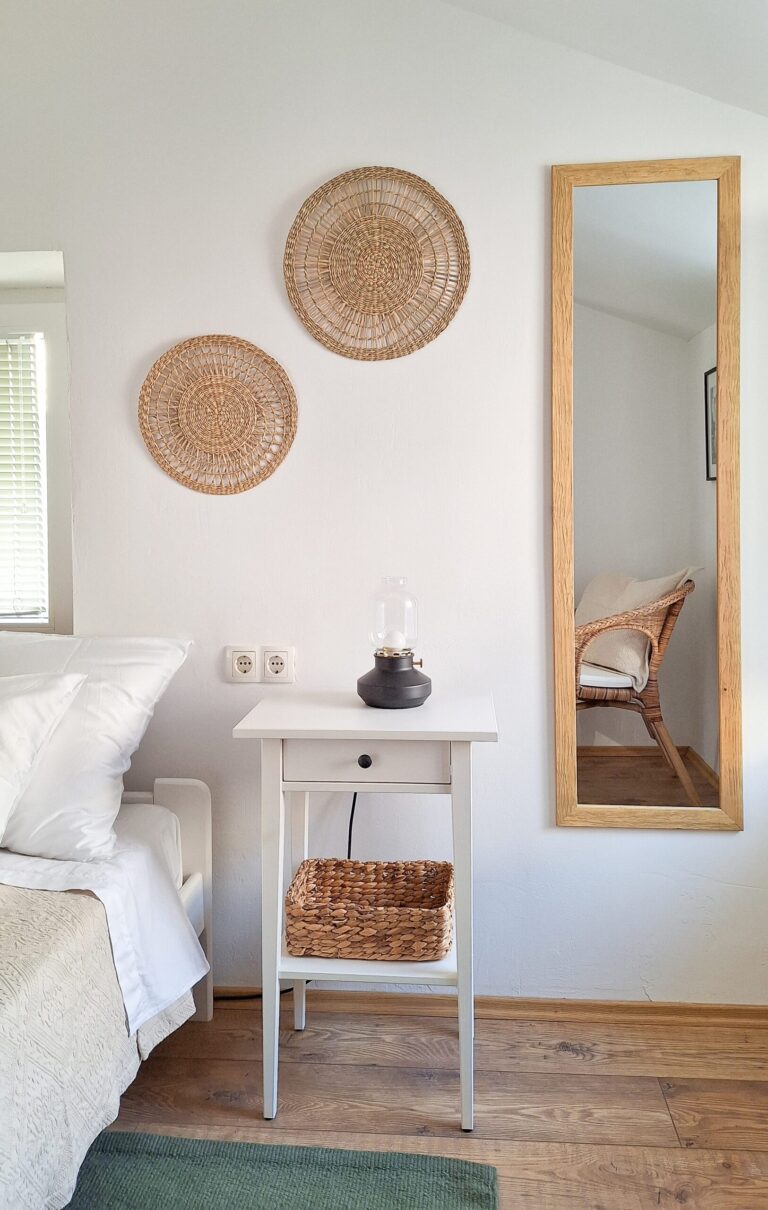
I chose a calm, natural palette:
white
beige
muted green
with small touches of black for contrast.
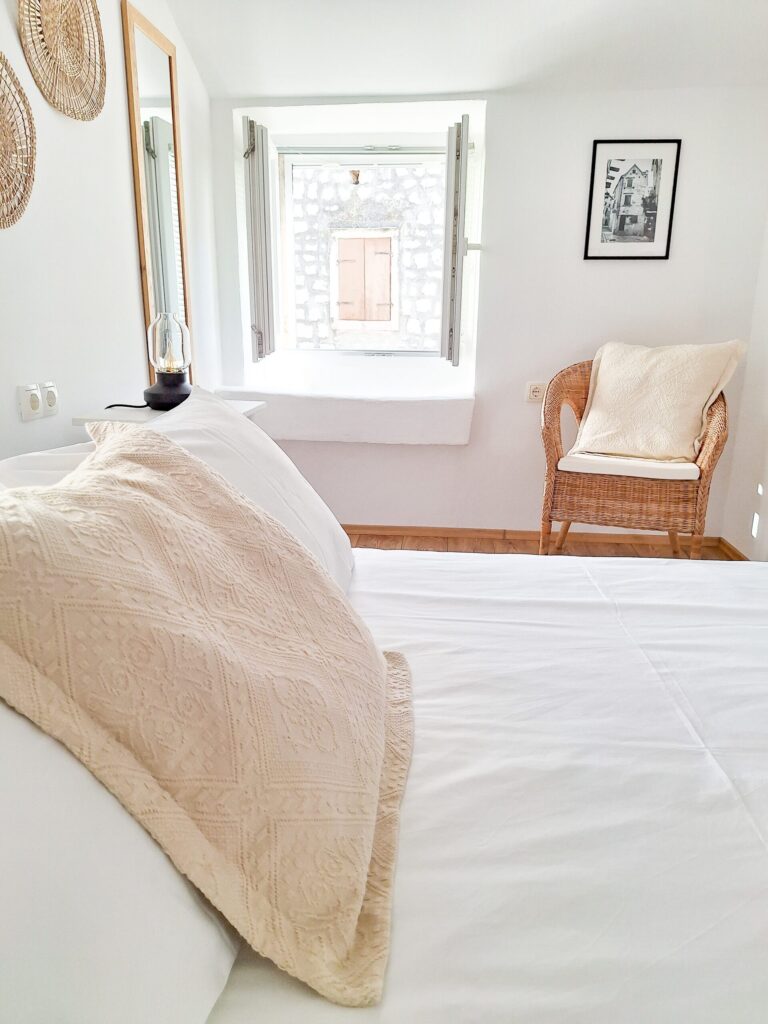
My goal was to keep the room simple and airy, using only a few carefully chosen pieces so the space would feel peaceful rather than crowded.
The furniture came together piece by piece.
A simple white wooden bed frame kept the room light and airy.
The biggest challenge was storage.
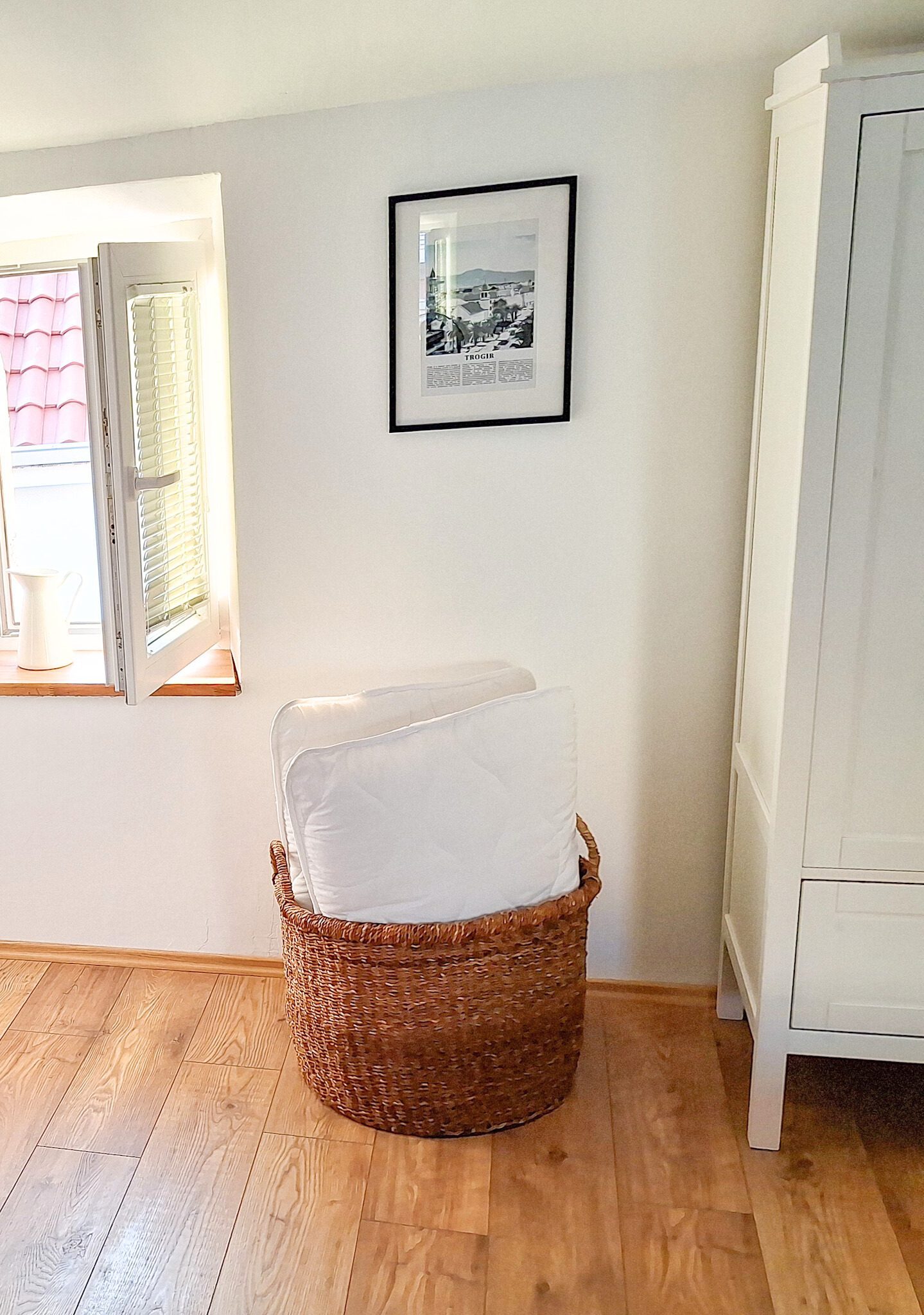
Because of the sloped attic ceiling, standard wardrobes were far too tall. After searching everywhere, I discovered IKEA’s SUNDVIK wardrobe, designed for children’s rooms.
At just 170 cm tall, it fit perfectly under the low ceiling — and its natural wood finish matched the space beautifully.
I added rattan accents throughout the room: an armchair, storage baskets, and wall mirrors.
If it were entirely up to me, I would probably put rattan baskets in every corner.
Black table lamps and framed black-and-white photographs of Trogir added contrast and character.
Slowly, the room came together. Light. Calm. Welcoming.
The Living Room: Working Around Staircases
The middle floor presented another challenge.
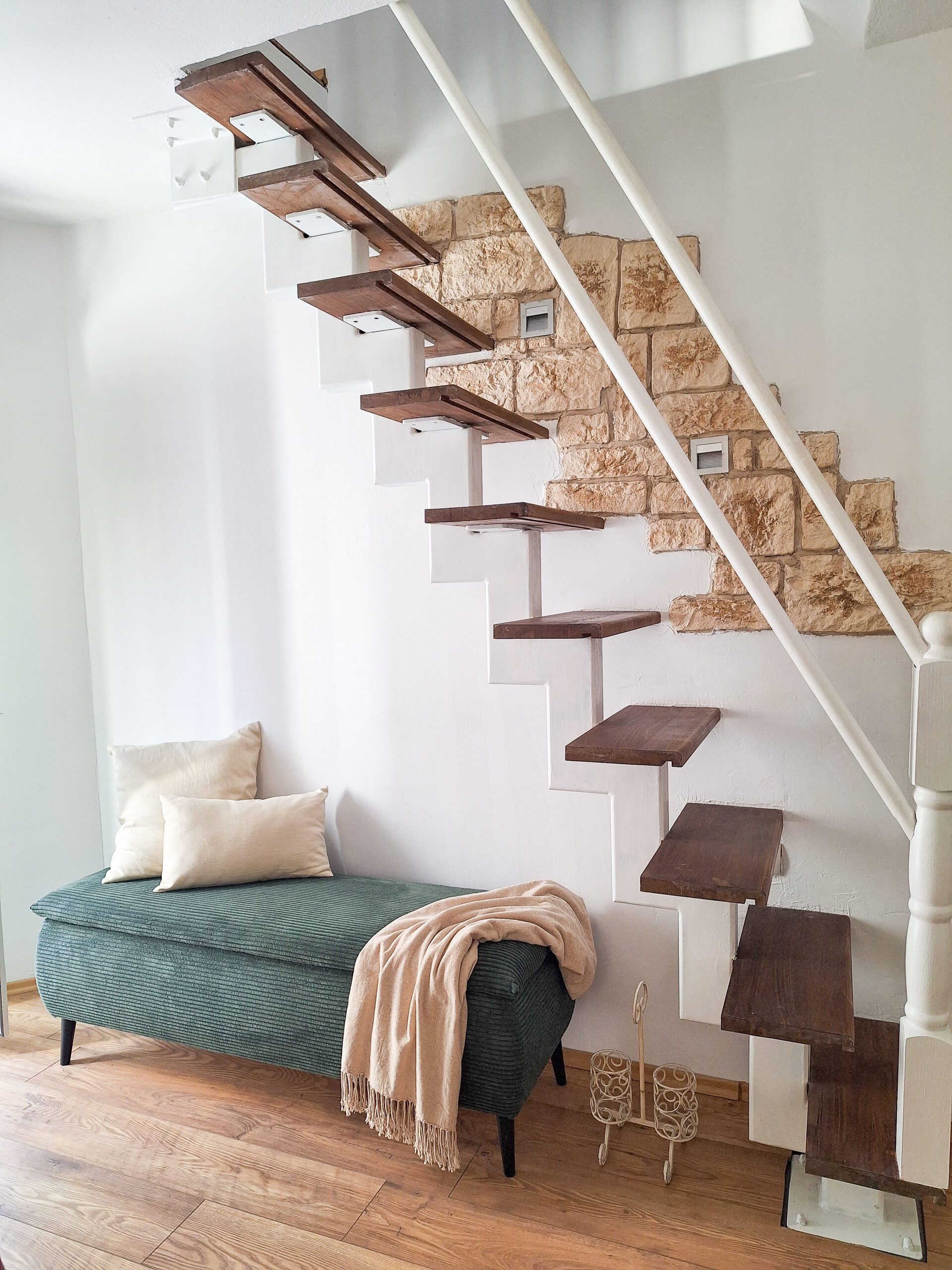
Two staircases cut through the space — one spiral staircase from the ground floor and another steep staircase leading to the attic.
Rebuilding them would have taken too much time and money, so we decided to design around them.
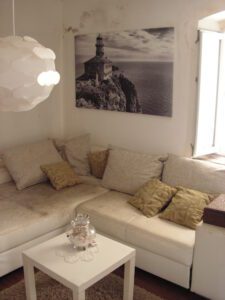
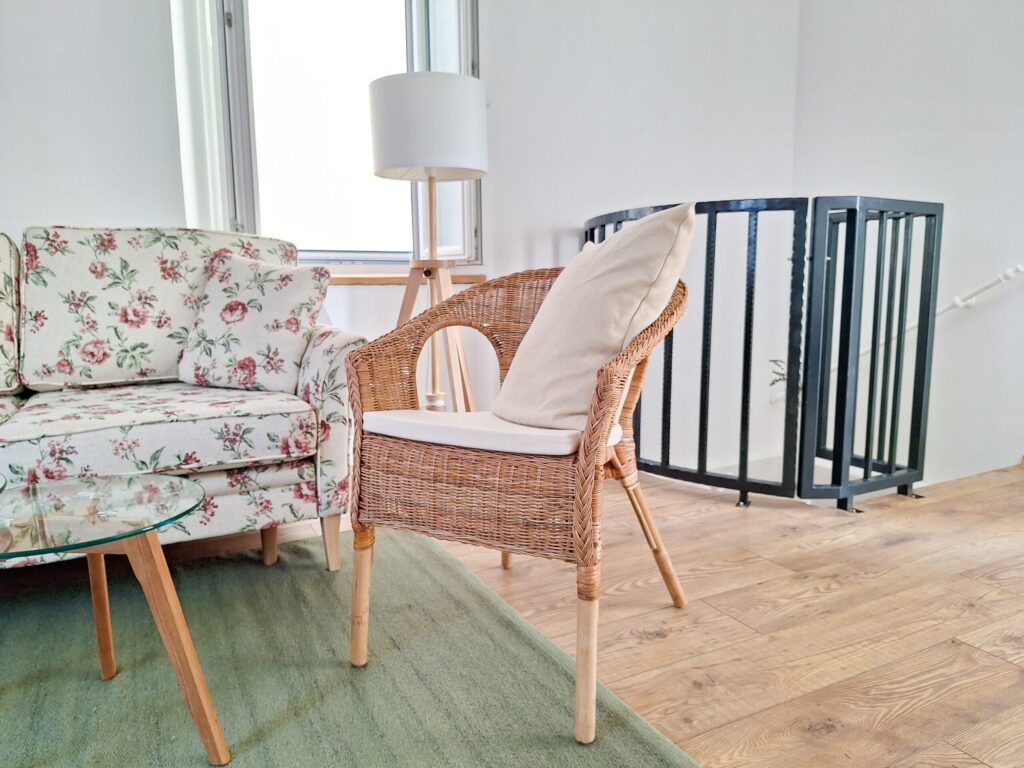
The sofa became the focal point of the room.
I fell in love with it immediately — a soft floral pattern that felt cozy and inviting.
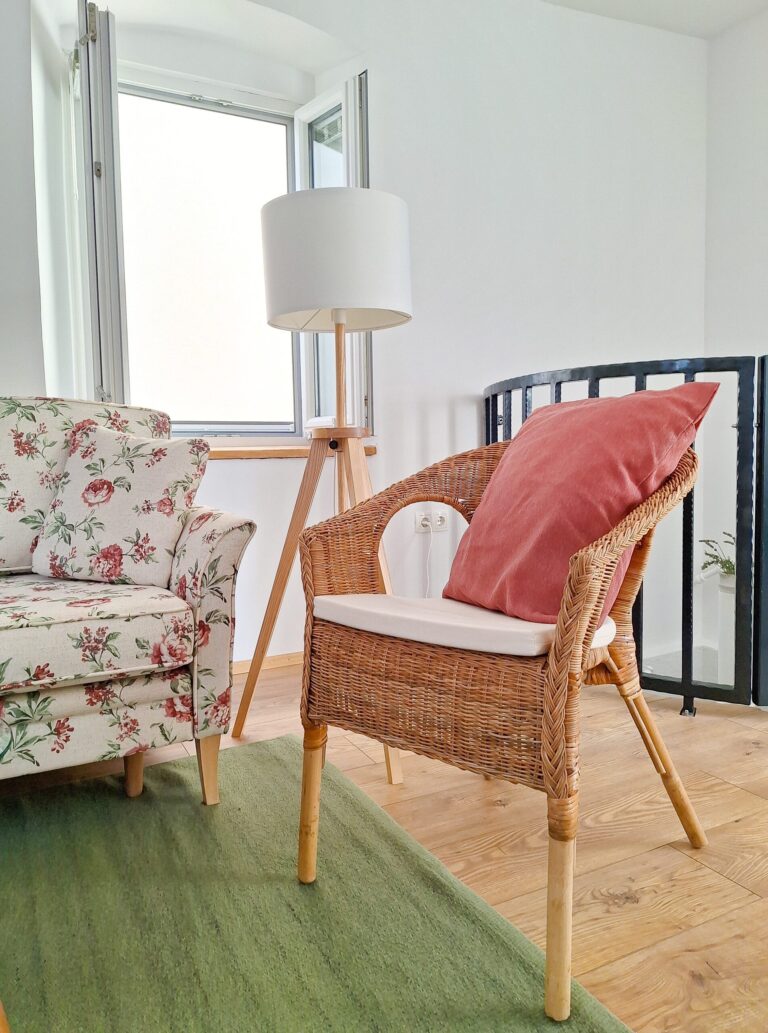
Everything else in the room was chosen to balance its presence without overwhelming the small space.
A mango wood sideboard housed the TV and added warmth.
A rattan armchair and pouffe introduced texture.
A transparent coffee table kept the room visually light.
One awkward corner between the balcony door and the stairs remained difficult to solve.
Then we found the perfect piece — a dark green velvet storage bench.
With a few beige cushions, it became both storage and a cozy seating nook.
At that point, the living room finally felt complete.
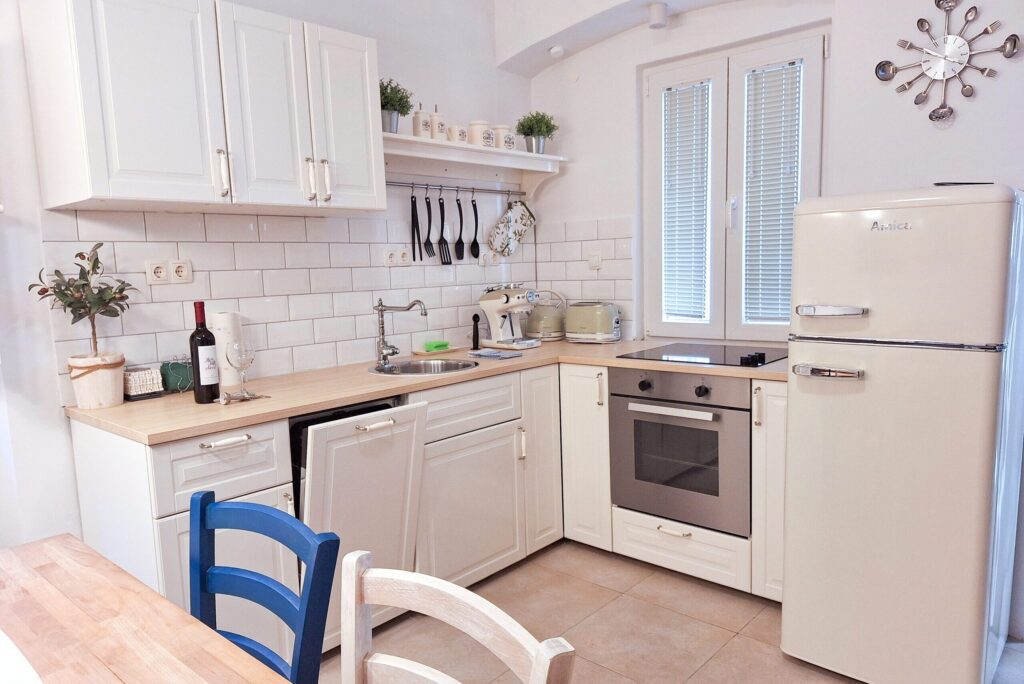
The Kitchen: Vintage Charm on a Budget
By the time we reached the kitchen, our budget was running low.
The bathrooms were in decent condition after deep cleaning, so we decided to leave them untouched and focus our remaining budget on the kitchen.
The layout itself was unusual, with two windows and uneven wall widths.
We adapted IKEA’s Method kitchen system to fit the space and chose cream Bodbyn cabinet fronts to maintain a rustic, traditional feel.
Then I found the perfect addition: a vintage-style cream refrigerator that matched the cabinets perfectly.
We kept the existing table and chairs — they suited the space and helped us stay within budget.
Small vintage appliances from Ariete’s series added charm and character.
Despite the constraints, the kitchen turned out beautifully warm and inviting.
Early July: The First Guests Arrive
Four months after we began, the house was ready.
The floors were finished.
The furniture was in place.
The mold-covered house had become something entirely new.
Light. Calm. Welcoming.
Our first guests arrived in early July.
And the reviews began coming in.
Guests mentioned the design, the atmosphere, the attention to detail.
Within the first two seasons, the house reached a 9.8 rating on Booking.com, with many guests describing it as cozy, thoughtful, and beautifully designed.
That moment made every hour of work worth it.
What This Experience Taught Me
Renovating that small stone house taught me something I carry into every project today:
Boutique spaces aren’t created by budget — they’re created by intention.
We didn’t have unlimited money.
We didn’t have months and months of time.
We couldn’t afford designer furniture or custom builds.
But we knew exactly what feeling we wanted guests to experience.
Every decision — from furniture to materials to layout — was guided by that vision.
And that made all the difference.
Not because we spent a fortune.
Because we cared.
If you’d like to see the renovation decisions that shaped this project — the mistakes, budget solutions, and lessons we learned — you can read about them in this post about what renovating our Airbnb taught me.
And if you’re dreaming of creating your own boutique-style stay, you might enjoy my free guide:
9 Simple Upgrades That Turn an Ordinary Rental Into a Boutique Stay.
Because beautiful spaces rarely come from large budgets.
They come from thoughtful choices.
Want to create a stay guests truly remember?
The Cosy Stay Guide shares the practical principles behind thoughtful interiors, guest experience, and calm hosting systems.